
Orunodoi 3.0 is a helpful scheme for Assam’s most vulnerable families. But it is not for everyone. The government has clear rules to ensure help reaches those who need it most.
This article explains who is not eligible for Orunodoi 3.0. It lists the households that cannot apply. Knowing this saves time and confusion. Let’s understand in simple words.
Important Note: The scheme is for one woman per household. If any member of the family fits the groups below, the entire household is not eligible. This is the law.
Who Can’t Apply for Orunodoi 3.0? – The Complete List
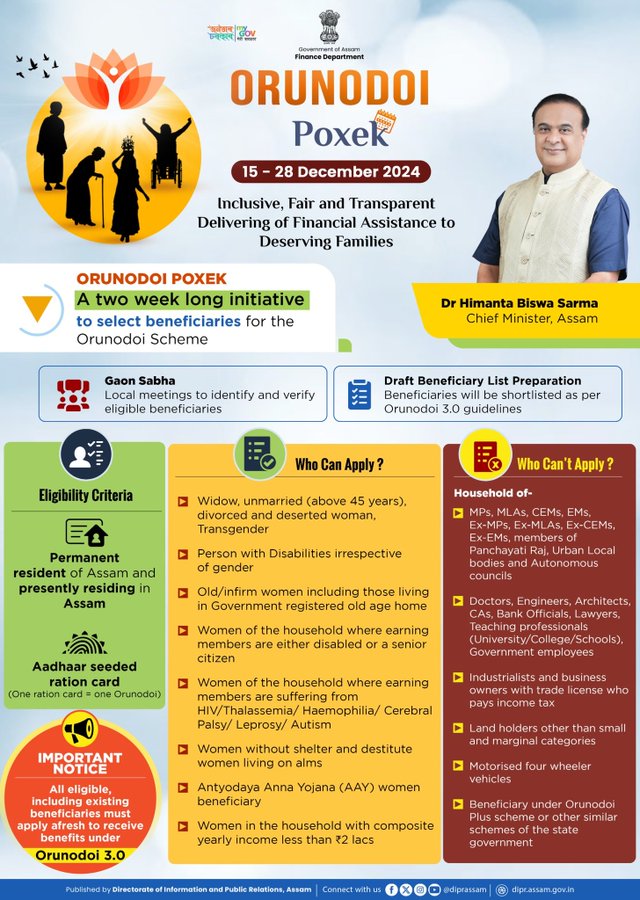
1. Households of Political and Elected Representatives
This includes families where a member is:
- Serving Leaders: MPs, MLAs, CEMs, EMs.
- Former Leaders: Ex-MPs, Ex-MLAs, Ex-CEMs, Ex-EMs.
- Local Body Members: Members of Panchayati Raj, Urban Local Bodies, and Autonomous Councils.
- Why? These positions come with a stable income and benefits. The scheme is for families without such financial security.
2. Households of Certain Professionals and Government Employees
If a family member works as one of these, the household cannot apply:
- High-Skill Professionals: Doctors, Engineers, Architects, Chartered Accountants (CAs), Bank Officials, Lawyers.
- Teaching Staff: Teachers and professors in Universities, Colleges, or Schools.
- All Government Employees: Anyone with a permanent job in any government department.
- Why? These jobs provide a regular salary, stability, and social benefits. The scheme targets families without this kind of reliable income.
3. Households of Business Owners and Taxpayers
A family is not eligible if it has:
- Industrialists or Business Owners: Those who have a trade license and pay Income Tax.
- Why? Paying income tax means the business or income is above a certain level. The scheme is for families with very low or no taxable income.
4. Households with Significant Land or Assets
You cannot apply if your family owns:
- Large Land Holdings: Land that is more than the “small and marginal” farmer category. (This typically means more than a few hectares).
- Motorised Four-Wheeler Vehicles: Any family that owns a car, jeep, or similar motor vehicle.
- Why? These are signs of significant assets. The scheme prioritizes families with no major assets or vehicles.
5. Households Already Receiving Similar Government Help
A household is not eligible if:
- It already has a beneficiary under the Orunodoi Plus scheme.
- It receives benefits from other similar cash assistance schemes run by the Assam State Government.
- Why? The goal is to spread help to as many unique, needy families as possible. One household should not get multiple similar benefits.
Important Things to Remember
- Household Rule: It takes only one member in the house falling into the groups above to make the entire family ineligible.
- Purpose is Fairness: These rules are not to deny anyone. They are to make sure the limited scheme funds go to the families with the greatest need.
- Verification Will Happen: Officials will check application details. Giving wrong information can lead to disqualification and legal trouble.
Frequently Asked Questions
What if my son is a school teacher?
Then your household is not eligible. Having a teaching professional in the family disqualifies you.
What if we have an old, unused car?
Owning a motorised four-wheeler, even if not used, makes the household ineligible.
What if we are poor, but my relative is an MLA?
The rule applies to your own household members. A relative living in a separate house does not affect your eligibility.
The Orunodoi 3.0 scheme has clear rules for who can and cannot apply. The groups listed above—like families of government employees, professionals, business owners, vehicle owners, and existing beneficiaries—are not eligible.
This ensures the financial help reaches the truly needy and vulnerable families of Assam. If your household does not have any members falling into the categories above, you may check the eligibility criteria for who can apply.
Always rely on official government sources for correct information. Understanding these exclusions helps maintain the fairness and true purpose of this valuable scheme.